


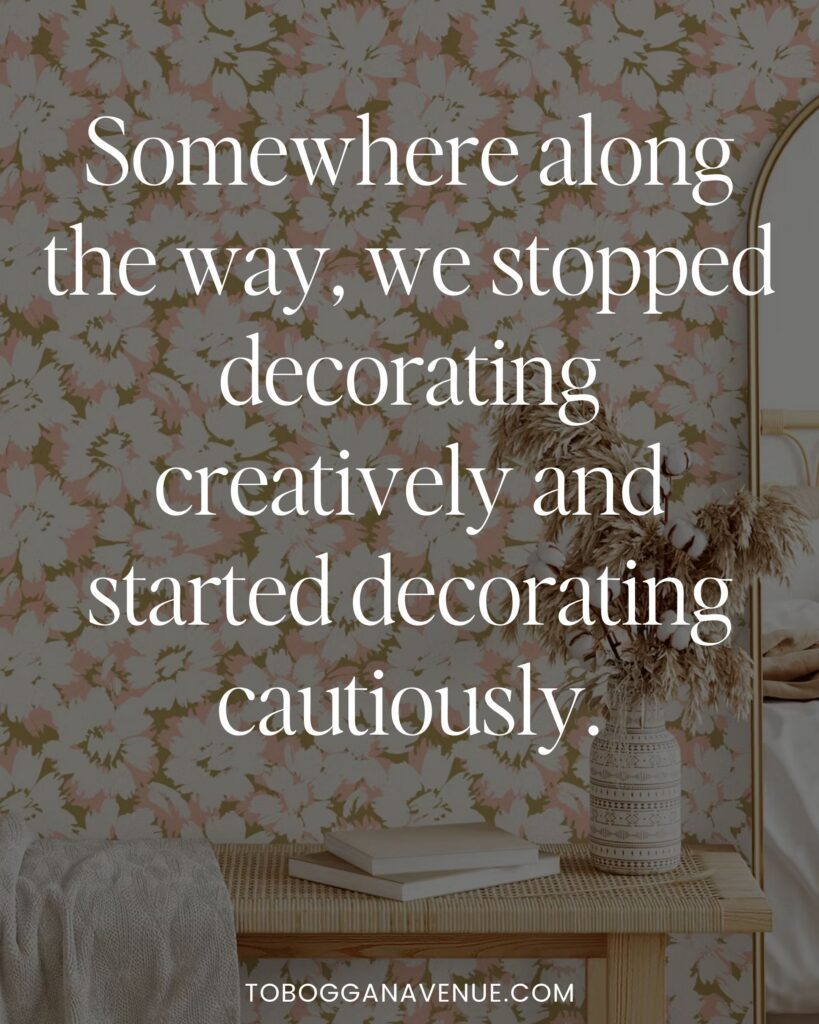
Somewhere along the way, a lot of us stopped decorating creatively and started decorating cautiously.
We heard that neutrals were timeless. Safe. Easy to live with. Easier to coordinate. Easier for resale. Easier for everyone in the family to agree on.
And listen to some degree, that’s all true. And I still love neutrals.
I love warm beige walls, natural textures, layered linens, creamy paint colors, collected wood tones, and cozy, quiet spaces. This is not an anti-neutral rant. 🤍
But somewhere between trying to “do it right” and trying not to regret expensive decisions, many of us lost personality in the process.
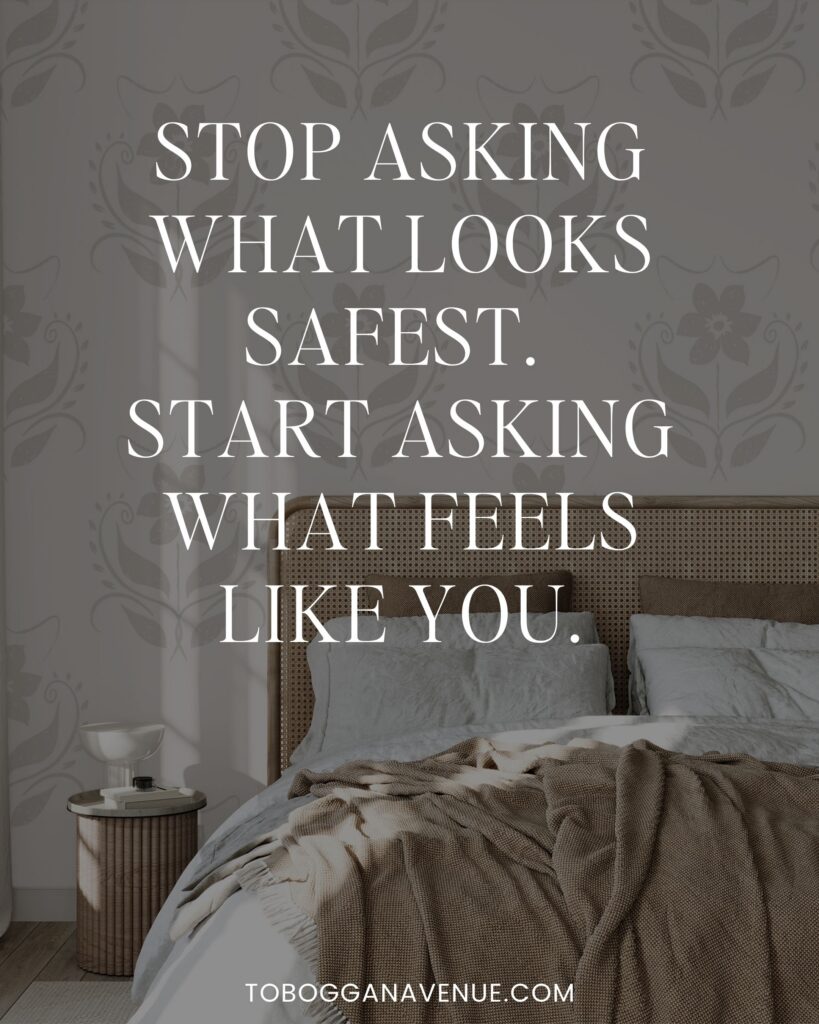
We stopped asking: What do I actually love?
And started asking: What feels safest?
The result? Homes that look…fine… but somehow still feel unfinished and disconnected.
Flat instead of layered. Safe instead of personal. Forgettable instead of memorable.
And if you’ve been staring at your walls lately thinking, Why doesn’t this feel like me anymore? You’re not alone, I’ve been there too.
Why We Play It Safe
Honestly, it makes sense.
Decorating can feel weirdly high stakes.
Paint is expensive. Wallpaper feels permanent. Furniture decisions feel loaded and costly. And after scrolling Pinterest or Instagram for three hours looking at beautiful homes, suddenly every decision feels like it needs to be “the right one.”
Then add in:
- decision fatigue
- family opinions
- budget considerations
- trend overload
- fear of regret
- years of hearing “keep it neutral”
…and suddenly doing nothing feels easier.
So we leave the walls alone.
We buy another beige pillow.
We save colorful interiors to Pinterest and then panic when it’s time to actually choose something for our own home.
But I think a lot of people are realizing something lately:
We don’t actually want a perfect showroom home.
We want a home with personality, story, layers, comfort, creativity, warmth, and a place that feels ours unmistakably (like our Grandma’s house felt exactly like her in all the very best ways).
The Problem Isn’t Beige
It never was. Some of the most beautiful homes I’ve ever seen are layered neutral spaces full of texture, warmth, contrast, collected pieces, meaningful art, vintage finds, natural materials, and personality.
Neutral does not equal boring.
But flat does.
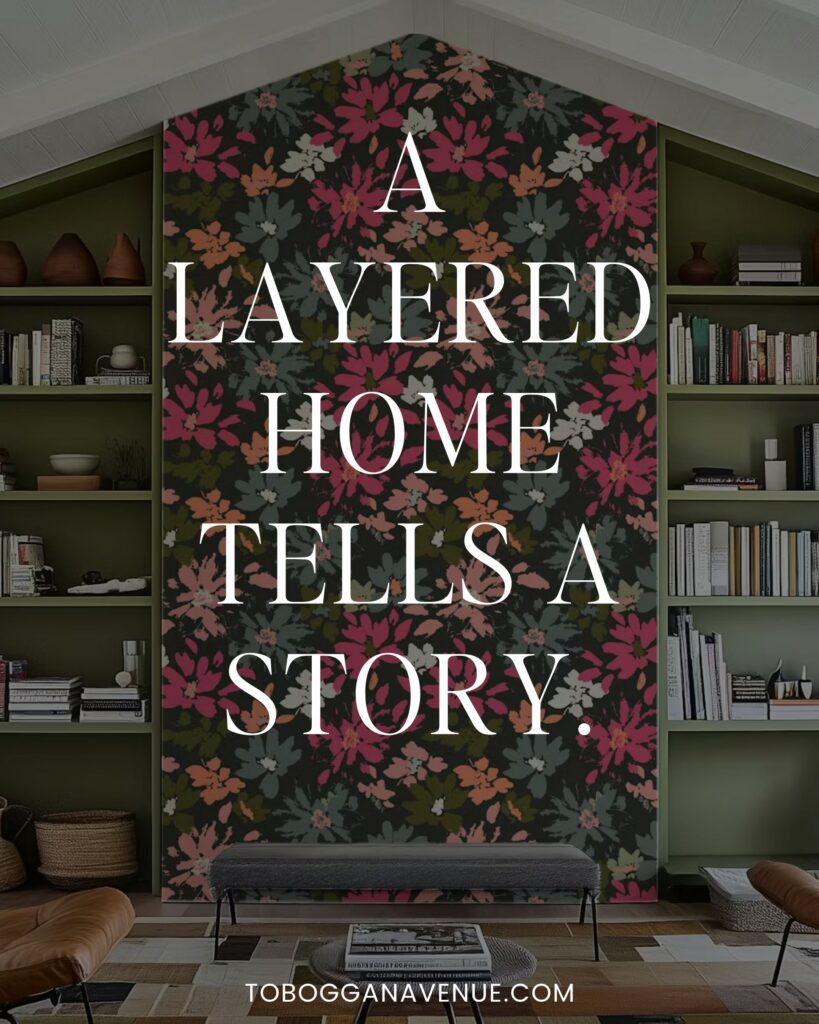
A layered home has:
- contrast
- texture
- variety
- personal touches
- things collected over time
- pieces that spark conversation
- details people actually remember
A “safe” home often ends up feeling like it was designed to offend absolutely no one.
Everything matches.
Nothing surprises you.
Nothing reveals much about the people living there.
And ironically, that makes it rather offensive because that’s not what we actually want. We’re craving more personality.
You Don’t Need a Whole House Design
This is the part where I want you to lower the pressure. Keep in mind that creating a home you love does not have to happen all at once.
In fact, I think the best homes are often created slowly, layer by layer.
You do not need:
- a massive renovation
- a giant budget
- a perfectly curated vision board
- every decision figured out before you begin (definitely not that, or you’ll never begin!)
You just need one starting point. Maybe it’s:
One wallpaper you love.
One room painted a deeper color.
One bold pillow.
One piece of art that finally feels like you.
I think that figuring it out as you go is part of the fun because your home should evolve with you. It should reflect the people who live there, even when those people have different styles and opinions. (Which, let’s be honest, is most families, right?)
Part of layered living is learning how to blend personalities together in a way that still feels intentional, cozy, collected, and a little (or a lot) bold and unexpected.
Where to Start If You’re Tired of Playing It Safe
If your home has been feeling flat lately, here are a few low-pressure places to begin:
Choose One Hero Pattern
Instead of trying to redesign an entire room, start with one thing you genuinely love. Maybe it’s wallpaper, fabric, art, a rug, a pillow. Let that piece guide the room instead of trying to coordinate everything first.
Paint Something Small
A powder room. A laundry room. A bookshelf. A home office wall. Spray paint a file cabinet.
Small spaces or spray-painted projects are good confidence builders.
Add Something Personal
Framed family photos count; the more fun, the better.
Vintage finds count. Family hand-me-downs count.
Travel souvenirs count.
Weird art you bought because you couldn’t stop thinking about it.
Your home should say something about you.
Stop Trying to Please Imaginary People
Admit it, a lot of us decorate for:
- future resale
- hypothetical guests
- trends
- internet approval
Instead of asking:
What would make me genuinely happy to walk into this room every day?
Focus on Feeling First
Before buying anything, ask:
How do I want this room to feel?
Creative?
Calm?
Cozy?
Collected?
Inspiring?
Playful?
That answer matters more than whether something is currently trending. If you need help, take the style personality quiz here.

Don’t Just Save This. Try Something.
This is your sign to stop waiting until you have the perfect plan. Take my husband’s advice for starting a project: “Sometimes you just have to start mixing the thinset to get yourself to start the project. Once that thinset is waiting and drying out, you have to get to work and figure it out as you go.”
The homes people remember rarely happen by accident. They happen because someone decided to stop playing it safe and start making choices.
Because a home with personality is always more interesting than a home that got every design “rule” right. And anyway, design rules are made to be broken…
And that’s why I created Layered Living: an email newsletter for homes with pattern, color, and story.
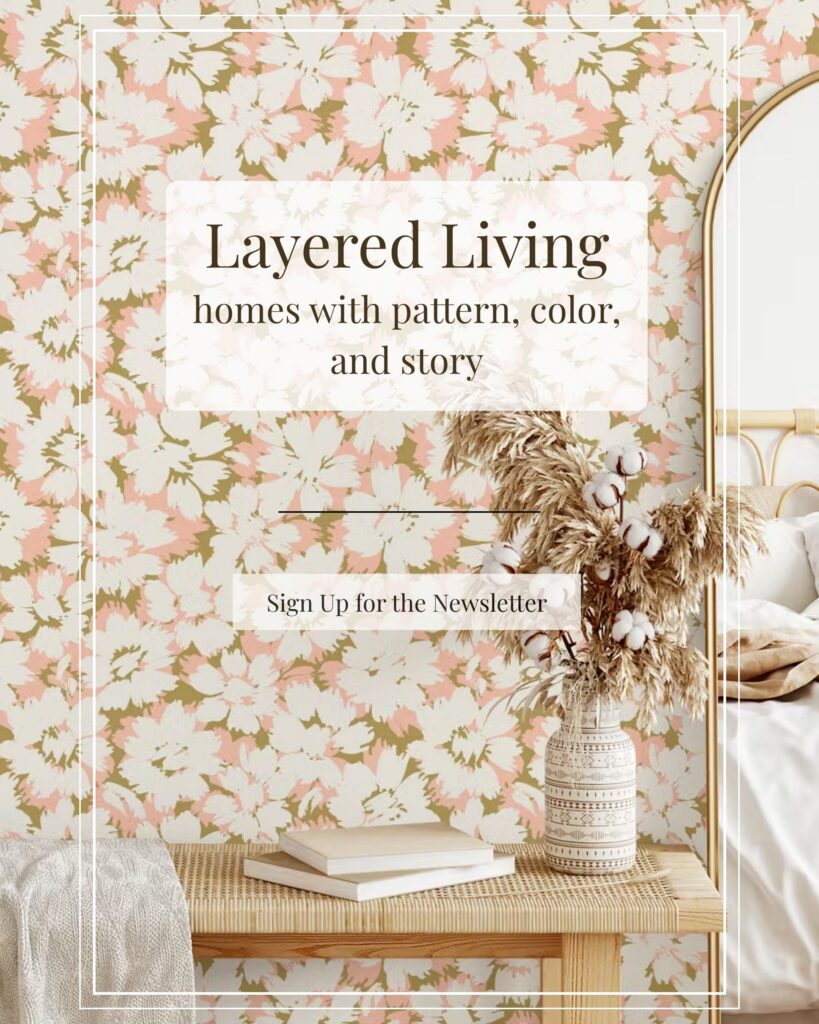
A place for creating homes little by little that feel more inspiring, more personal, more creative, and more reflective of the people living inside them.
So, here’s what to do: save the inspiration. Sign up for the newsletter here.
And then?
Try something. (and let me know how it went at jennie@tobogganavenue.com)


Read the Comments +